Window light is the secret to photo-real renders
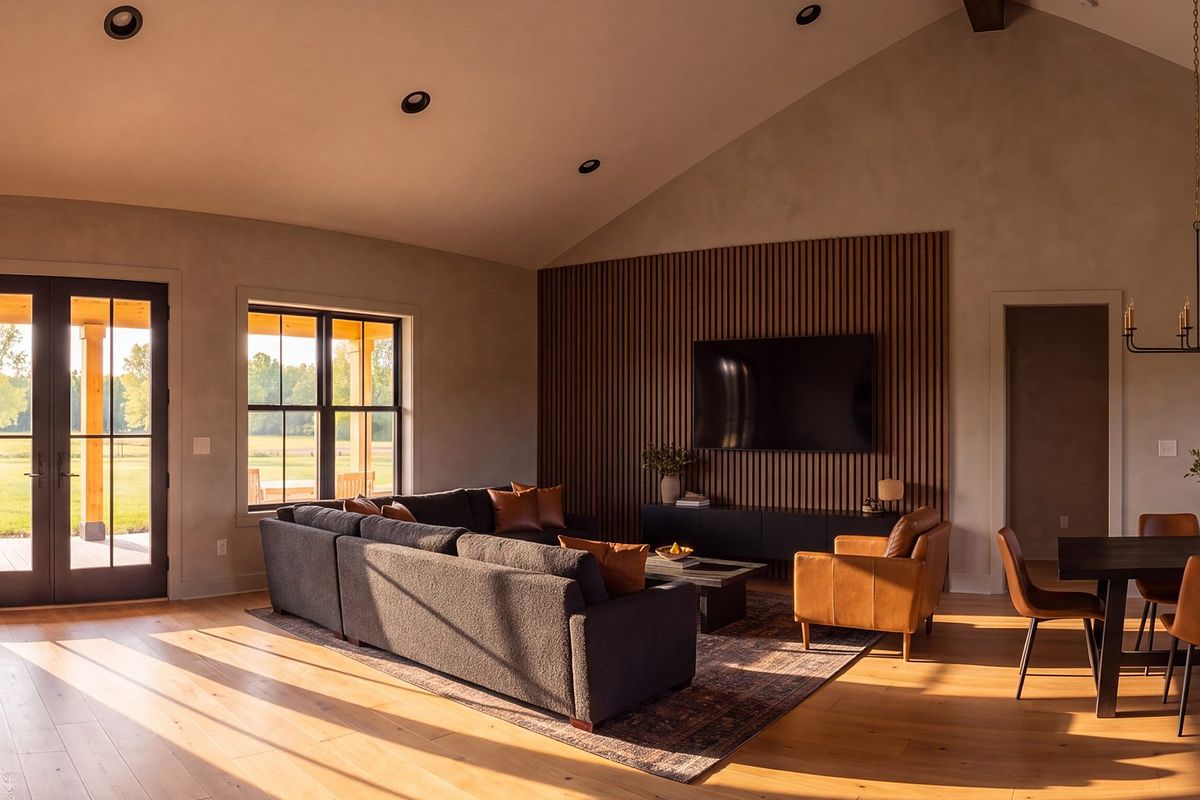
The first thing we notice in a room is often not a piece of furniture or a finish. It is the light. A bright window, a soft shadow across the floor or a warm reflection on a wall tells us something about the space before we have studied its details. In a rendered home, those signals help make the architecture readable.
Window light needs to belong to the floor plan. If an image is lit in a way that ignores the real openings, it may look polished but fail to communicate the home. We start with the position and size of the windows, then consider how light moves into the room from those sources.
Direction creates depth. A cabinet face and its side should not read as the same flat surface. A chair needs contact with the floor. Shadows help the eye understand distance, while reflected light keeps darker areas from losing their material character. The aim is not maximum brightness; it is a room that feels coherent.
Materials change the conversation. Wood catches light differently from stone. A painted wall behaves differently from glass. When those relationships are considered together, the image begins to feel like a place rather than a collection of objects. Small details support that feeling, but they cannot rescue lighting that does not make sense.
Eye-level views are part of the same approach. Buyers are not studying a building from an impossible height; they are imagining standing near an entry, turning toward a kitchen or sitting within a great room. Light gives those viewpoints a natural focal point and helps explain where the room opens up.
Photo-real work is not simply about adding more detail. It is about choosing the right detail and allowing proportion, materials and light to agree. When they do, the room becomes easier to understand. That is the kind of image we want a buyer to remember: not a spectacle, but a believable home.
← Back to the journal